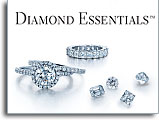
NEW!"Diamond Essentials Collection" for winter 2010. Click here.

We not only sell diamonds, but we are experts in them as well. Sign-up to receive
our free newsletter.
|
   
Jewelry
has always been synonymous with emotions. Take for instance the wedding band,
always a sign of commitment, love and togetherness, it symbolises the coming
together of two souls in the bond of holy matrimony. After man’s three basic
needs of food,clothing and shelter were met, the emotional bonds that tied us
together, needed to be symbolised and eternalised, at its very core, that
became the function of jewelry. In our upcoming series, we will trace the
origins of jewelry until the modern day and examine the style, the ethos and symbology of jewelry over the ages.
In
the ancient times:
Jewelry
has its roots in the ancient times. Millennia before the birth of Christ, bead
jewelry in the cave systems of Europe and Africa have been unearthed. While most
of these civilizations have long since vanished the very fact that they
existed, is proven by the unearthing of their jewelry. Among the more civilised
cultures of the Orient, metallurgy was practised and in combination with
precious stones and pearls, jewelry, in the form of necklaces, rings, anklets
and other ornaments (which are still in vogue today) were made.
In
fact such was the prowess of the jewel smiths of India and China, that even
Alexander the Macedon was captivated by their craft and is said to have
commissioned a number of ornaments for his concubines and mistresses. Some
historians believe that Alexander was among the first non-Westerners to have
carried some of these designs home, from where the trend of jewelry is said to
have spread to Europe.
While
jewelry in India and China was widespread and even the common folk had some
access to these baubles, jewelry was the prerogative of the wealthy in the
Egypt. The Ancient Egyptians seemed to have taken jewelry to a whole new level.
Their fascination towards ornamentation bordered on the obsessive. Many statues
of the Gods and Pharaohs (who themselves became ‘Gods’ posthumously) were
ostentatiously bedecked and swathed in ornaments of different metals and
precious jewels.
Another
important contribution of the Egyptians to jewelry was the custom of trading
wedding rings. It is said that when an Egyptian of high birth took a woman to
be his wife, he would gift his spouse a circlet of any metal (according to his
status) and she in turn would do the same. This custom was then adopted by the
Romans, who through their conquests spread this aspect of culture across
Europe.
By
the time of the decline of the Roman Empire, the practise of exchanging rings
had become an accepted social custom which the Church gave credence to by
blessing the rings of a couple on the altar before they were exchanged by
husband and wife.
The
Middle Ages:
The
decline of the Roman Empire, saw Europe in chaos. By this time, many of the
noble families in the region were great patrons of jewelry. Gold and diamonds
from India, were regularly ferried to Europeans by the Arabs who had become the
ideal go-in-betweens for this burgeoning trade. The Church in particular had
become rich and jewels for the purpose of studding religious artefacts was a
common practise. This practise gave rise to a class of artisans, who in turn
were the modern precursors of jewelry design houses like Tiffany and Cartier.
We
hope this post has shed some light on the evolution and distribution of jewelry
over the ages. Do let us know about what you thought of it, in the comments
below!
Relationships
are beautiful expressions of kinship, love and trust shared between two people.
There are few relationships as intimate or as lasting as between a husband and
wife. The love and commitment shared by a man and woman has spawned epics of
love and longing that have manifested themselves in the form of stories, poems,
movies and books across the ages.
Jewelry plays a significant part in the expression of love between two people. From a
commitment bracelet, to a diamond solitaire, from an engagement ring to a
quirky tassel or anklet, the symbolism of jewelry in a committed relationship
is of great significance. The following is a guide to the perfect jewelry for
committed couples.
For her:
Diamond
Rings:
A
circlet of eternity crowned by an immortal sparkling stone, that says that
she’s the only woman who will ever truly win your heart and affections.
Diamonds have been considered as appropriate presents for paramours from time
immemorial. The Greeks considered these stones as tears of the Gods, while the
Romans were among the first to fashion rings that were studded with diamonds.
Being one of a kind and rare, diamonds are the perfect statement of intent and
commitment to your significant other. Whether it is a single diamond or a row of tiny diamonds in shapes that are unique, these rings are one gift with which
you couldn’t possibly go wrong.
Earrings:
Whether
you choose simple studs or more intricate chandelier style earrings, these
pieces always convey the feelings of love and commitment. When choosing
earrings for your special someone, always make sure they go well with her face
cut. A simple rule of thumb, if she has
a longish face, studs in floral, geometric or nature inspired shapes are a good
bet. Round and oval face cuts could be best accentuated with longer chandelier
style earrings. Choose the metal and stones wisely. Coloured stone should be
chosen taking into consideration your beloved’s skin tone, though diamonds are
the best bet for all skin types.
Bracelets:
A
reminder of love around your partner’s wrists, bracelets are the best way to
arrest your partner and make her your own. A variety of bracelets are available
for the modern woman. From the always elegant string of miniature diamonds to
the more whimsical charm bracelets, these ornaments are perfect and accentuate
every facet of your lady love’s personality. Perfect on a formal gown as it can
be with a chic, all encompassing casual look, bracelets are eternal reminders
of love and commitment.
Solitaires:
A
single, precious diamond, set on a minimal chain, is how many perceive a
solitaire. Solitaires though are much more versatile and can be set into almost
all sorts of ornaments. From a ring with one diamond as a central focus, to
earrings with single precious stones, to a necklace with a diamond in colour or
white as the focal point, solitaires are a timeless, ageless way of telling
your soulmate that she’s your one and only!
Anklets:
Anklets
are a more esoteric, eccentric gift to appreciate and celebrate your partners
unique and signature brand of kookiness. Perfect if your partner is fascinated
by the orient and has a slightly crazy, wild side.
For
him:
The list of Jewelry for men is normally not as exhaustive as it is for women though
a few ornaments are now gaining popularity. For your Adam, here is a list of
options, other than the usual ring or watch.
Cufflinks:
Ideal
if your man wears business suits or dress shirts. Cufflinks in semi-precious
metals like tungsten and titanium, either without any embellishments or colored
stones are perfect. Make sure that the colour of the cufflinks match the color
of the shirt and suit though.
Bracelets:
Chunky
bracelets with no embellishments are perfect for the outdoorsy type of man,
with wider wrists, or for a man who loves working out to keep himself in prime
condition.
What is
the perfect wedding ring? There is no straight answer to this question, but for
a ring to qualify as perfect it has to score on two points. One, it must be
something that your fiance would be proud to wear and two it must be a symbol
of the everlasting love you share with your better half. It sounds simple but
it’s a lot harder to pick the perfect ring than it seems. Buying a wedding ring
is a costly affair, so you don’t want to go wrong with the choice. So how can
you ensure the wedding ring you picked is the perfect one? Read on for answers.
1.
Learn all you can about her tastes
All
women dream about their perfect wedding from the time they were kids. Women who
have been in a long term relationship and are thinking about marriage, often
start talking with their friends and relatives about their ideal wedding ring.
If she has never told you about her personal preferences, you can ask her close
friends and family members. Sisters, cousins, mothers, and best friends can be
the very best sources of detailed information on what sort of ring your future
fiancée would love to be given.
2.
Consider more than the ring
Though
the ring is an item you will use to propose, consider additional factors that
could influence your decision while buying the ring. Factors like, free or
discounted cleaning services, coverage for basic repairs, such as prong tip
repair, assistance trading up to a ring with a larger gemstone, resizing
services, replacing broken gold elements, such as clasps etc. Online websites
like NYDT offer exclusive diamond jewelry for all
occasions and the website is a fantastic place to read about the different
types of options available. They also offer additional services like returns,
lifetime upgrades and free inspections.
3.
Become familiar with the basics of diamond jewelry
Learn
everything you can about diamond jewelry before you take the plunge. Diamonds
are the preferred gemstones for weddings and other special occasions. To get the
best value for money make sure you purchase a diamond which is independently
graded. Each gemstone is graded according to a particular grade. A diamond is
graded on an international standard that measures various qualities of the
stone, including the color and clarity.
4. Dont
make a hasty decision
There
are virtually countless stores and independent designers from where you can buy
your perfect wedding ring, but don’t be in a hurry. The only way to have a
thorough shopping experience is to give yourself a lot of time to consider all
your options. You should take your time; spend a reasonable amount of time in
each store and also consider timing your shopping to coincide with major
seasonal sales.
Buying a wedding ring is the one decision you cannot regret, so decide on your budget,
speak to her relatives and friends, and visit different stores to pick that
perfect wedding ring. It will be all worth it, when you see the smile on her
face. Happy shopping!
The official definition of UN for conflict diamonds is, “Any diamond that originates from areas controlled by forces or factions opposed to legitimate and internationally recognized governments, and are used to fund military action in opposition to those governments, or in contravention of the decisions of the Security Council". There was a time when you could never know if the diamonds you procure were diamonds funding an act of terror or conflict-free diamonds, but those days are almost over. Thanks to a campaign started in 2000 to track the origins of all rough diamonds that eventually resulted into the forming of KPCS (Kimberley Process Certification Scheme), conflict diamonds have a far less market today and have thus, significantly decreased in sale.
While the ultimate goal of the Kimberly Process is to document and keep a track of every rough diamond originating from a conflict area in Africa and entering a foreign country which is a part of the association, the process is highly difficult and involves many government and non-government organizations that need to cooperate in alliance. Presently the Kimberley Process is making a marked difference and is being acknowledged, keeping in mind that yet there is a small percentage of conflict diamonds entering the global market. While there is no visual differences between conflict and conflict free diamonds, one can ensure the origin of a diamond by seeing that it carries all the necessary certification proving its authenticity.
On the other hand, conflict free diamonds are those which are harvested in a safe and well thought-of manner. The places where they originate are owned and run by manufacturers that believe in the betterment of the lives of their workers and have taken big steps towards improving their lifestyle. The diamond manufacturers work with the community and build school and hospitals for the village dwellers and employees’ family members, and are also aware of the environmental consequences and safety hazards involved in such mining processes and invest large amounts to ensure the safety and security of the workers. In view of this fact, these diamonds are ideal for purchase and come with no negative factors whatsoever.
All these facts make it all the more important that you procure your diamonds from a reputable source that is going to provide you with a recognized diamond certification. Today every wise buyer wants proper certification of the acquired diamonds’ quality as well as origin. Conflict-free diamonds are not hard to find, provided you deal with a trustworthy diamond trader. It may be a fairly good idea to check out the company’s or diamond trader’s website to get a better insight into its ethics and working. While almost all diamond traders stay away from conflict diamonds, your research can help you steer clear of dicey dealers.
While the atrocious conflict in Sierra Leone in the 1990s was the reason the world took notice of conflict diamonds, since then various governments, the UN, the diamond industry, and a number of eminent NGOs have taken far-reaching measures to ensure that such diamonds do not enter the legitimate diamond supply chain, ultimately resulting in the total eradication of blood diamonds from the world’s diamond trade. One of the major roles in achieving this goal is played by the Kimberley Process and the Kimberley Process Certification Scheme (KPCS). The Kimberley Process is one in which rough diamonds are sealed in tamper-resistant containers having a forgery resistant conflict free certificate with unique serial numbers each time they cross over an international border, helping ring-fence conflict diamonds and in the process averting them from funding any rebel groups or illegal activities. The United States’ Clean Diamond Trade Act (CDTA) helped enforce KPCS in the US, which is the largest consumer of the world’s diamonds.
Today, thanks to KPCS with a membership of over 74 countries and supplementary allied actions, diamonds are driving economic opulence and growth for diamond-rich countries. Starting from appropriate healthcare, free education in countries like Botswana, the awareness and spotlight on the improvements seen in these countries are persuading charity organizations to pitch in, and diamond manufacturers to improve working
conditions and build schools, play areas, and hospitals in the areas where mining and manufacturing of diamonds takes place.
As a consumer you can be sure that the diamonds you are procuring are conflict free diamonds, by purchasing the stones from a well-reputed source, and asking for a statement of origin, or System of Warranties for assurance. The System of Warranties is printed on the invoice presented to you saying, “The diamonds herein invoiced have been purchased from legitimate sources not involved in funding conflict and in compliance with United Nations resolutions. The seller hereby guarantees that these diamonds are conflict free, based on personal knowledge and/or written guarantees provided by the supplier of these diamonds.”
|